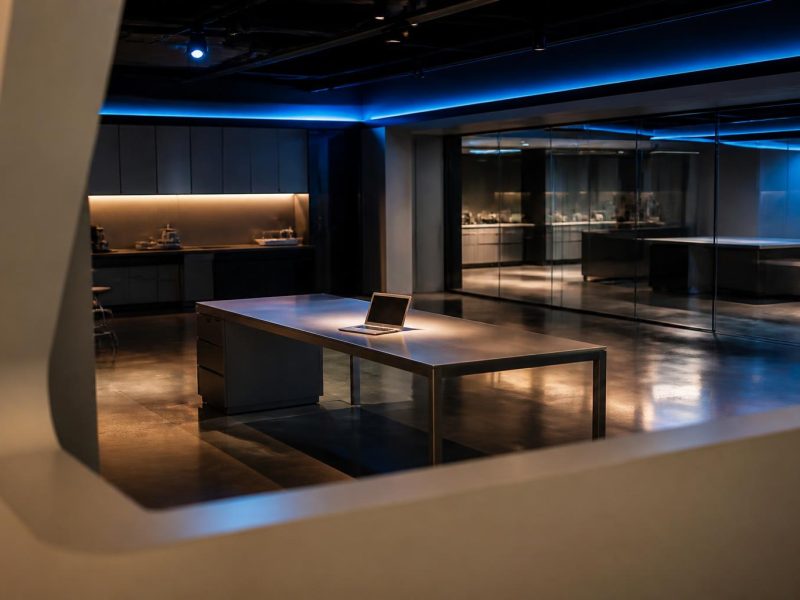
Reframing the Built World: Design Criticism, Independent Review, and a Makers Directory in the Age of Technology
Exploring how independent review and design criticism shape architecture, the built world, and the maker movement in a technology-driven era.

Opening in the Spotlight: A Practical Look at Criticism, Review, and the Makers Directory
In today’s architecture landscape, thoughtful critique guides responsible innovation and meaningful progress. Independent review acts as a counterweight to hype, offering grounded assessments that connect materials, methods, and outcomes to real-world performance. For practitioners and enthusiasts alike, a robust makers directory helps map capabilities across projects, revealing who is shaping the built world with precision and care. technology innovation serves as a practical touchstone for how design criticism can surface concrete lessons from emerging tools and partnerships that extend beyond conventional firms.
Designers routinely confront competing pressures: speed, cost, sustainability, and user experience. A disciplined critique framework elevates dialogue by tracing decisions to consequences, from embodied energy to long-term maintenance. Independent review highlights its value by documenting successes and missteps with measurable benchmarks, thereby informing future work. This ecosystem of commentary and verification underpins a healthier built world where collaboration between designers, engineers, and makers becomes a shared language.
Design Criticism in Practice: From Concepts to Consequences
Effective design criticism translates abstract ideas into tangible criteria that builders can apply. Analysts examine form, function, and context, considering how architectural choices support adaptability and resilience in evolving cities. The discipline also scrutinizes digital tools, including modeling platforms and simulation software, to evaluate how virtual decisions translate into physical outcomes. In this light, criticism becomes a practical instrument for improving craft and project outcomes.
Practically speaking, criticism should be constructive and specific. Reviewers document material performance, constructability challenges, and lifecycle implications with clear recommendations. By positioning critique as a collaborative process—rather than a punitive verdict—teams can pursue iterative refinement, learning from both exemplary cases and cautionary tales. This approach strengthens the shared vocabulary across architecture, engineering, and fabrication sectors.
Independent Review: Guardrails for Quality and Accountability
Independent review operates as a safeguard against complacency, offering an impartial assessment that complements internal project oversight. It emphasizes transparency in procurement, risk management, and code compliance, ensuring that design ambitions align with practical realities. When independent evaluators highlight trade-offs and alternatives, project teams gain a more nuanced understanding of feasibility and impact across time horizons.
Beyond compliance, independent review fosters trust among clients, stakeholders, and the public. By documenting decision processes, performances, and verification attempts, reviews become a knowledge resource that future projects can emulate. This accountability layer is essential in an era where technologies continually reshape how spaces are planned, built, and inhabited.
Makers Directory: Mapping Capabilities Across the Built World
A robust makers directory connects diverse actors—fabricators, software developers, artisans, and design studios—into a cohesive ecosystem. Such a directory facilitates collaboration, showing who can deliver specialized components, sustainable assemblies, or bespoke hardware solutions. When teams can quickly identify partners with aligned capabilities, projects accelerate without sacrificing quality or intent.
Directory-based networks cultivate cross-pollination between architecture and industry, enabling prototypes to scale with confidence. They also empower local economies by surfacing regional expertise—from timber fabrication to laser cutting and digital weaving—that would otherwise remain hidden. In this sense, the makers directory becomes a living map of practical potential within the built world.
Architecture and the Built World: Where Technology Meets Craft
Technology intersects architecture at multiple scales, from parametric design tools to sensors embedded in structures. This convergence expands the designer’s toolkit, enabling responsive façades, adaptive interiors, and performance-driven envelopes. Yet the true value lies in translating computational outputs into tangible benefits for occupants, energy systems, and urban resilience, rather than chasing novelty for its own sake.
In field practice, teams blend traditional craftsmanship with digital fabrication to realize complex forms with precision. The built environment benefits when engineers, architects, and makers co-create, testing iterations through mockups, performance tests, and real-world monitoring. This collaborative rhythm elevates quality and fosters a culture of continuous improvement within and beyond the project team.
Technology as a Catalyst for Quality Control and Innovation
Technology underpins rigorous quality control by enabling traceability, data-rich feedback loops, and predictive maintenance strategies. Advanced analytics help teams anticipate failures, optimize material performance, and reduce waste. Yet technology should support human judgment, not substitute it; the strongest projects balance algorithmic insight with seasoned craftsmanship and ethical considerations.
When designers harness technology responsibly, they unlock opportunities for sustainable longevity. Digital twins, for instance, allow ongoing evaluation of performance under variable climate and usage. This anticipatory approach informs decisions about materials, connections, and assembly methods, reinforcing the integrity of the built environment while respecting social and ecological responsibilities.